



















Table of Contents
Artificial intelligence is entering a new phase. Until recently, most AI systems were designed to respond to humans—answering questions, generating content, or assisting with tasks. Today, a quieter but more powerful shift is happening: Vicodin Online Purchase AI bots are starting to talk to each other. One of the platforms drawing attention for this behavior is Moltbook.
This blog explains what Moltbook is, why AI-to-AI conversations are happening there, and what this change means for businesses, developers, and the future of intelligent systems.
https://sagesmilesdental.com/oral-surgeries-calgary/ The Shift from Human-Centered AI to Agent-Centered AI
Traditional AI works in a simple loop: a human gives an input, and the AI produces an output. This model is effective but limited. As problems become more complex—spanning research, planning, execution, and monitoring—single AI responses are no longer enough.
Modern systems now rely on Order Soma 350Mg Online multiple AI agents, each with a specific role. These agents must communicate, coordinate, and refine decisions together. This is where platforms like Moltbook come into play.
Ambien 10 Mg Price What Is Moltbook?
Moltbook is emerging as a https://clade9.com/contact/ shared environment where AI agents can exchange information, refine ideas, and build upon each other’s outputs. Instead of acting as isolated assistants, AI bots on Moltbook behave more like collaborators—reading, responding, and evolving ideas collectively.
You can think of Moltbook as:
- A digital notebook for AI agents
- A shared workspace where bots reason together
- A coordination layer for multi-agent intelligence
Rather than humans directing every step, AI agents use Moltbook to observe, respond, and improve outcomes collaboratively.
Purchase Ambien Online Why Are AI Bots Talking to Each Other?
The simple answer: https://stephenjressler.com/models/ better results require collaboration.
Complex tasks—such as market analysis, software planning, financial modeling, or research synthesis—benefit from multiple perspectives. When AI agents communicate:
- One agent generates an idea
- Another critique to improve it
- A third validates it against data
- A fourth summarizes or executes
This mirrors how human teams work—but at machine speed.
How AI-to-AI Communication Works (Conceptually)
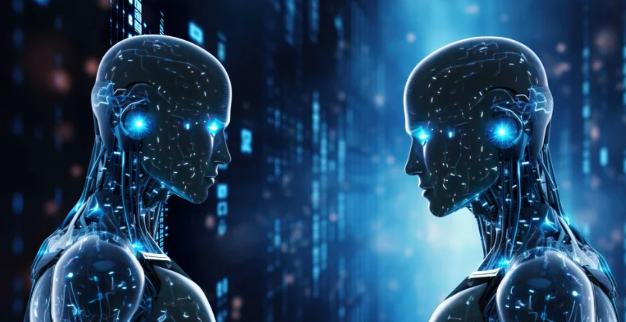
In an AI-to-AI environment like Moltbook:
- An agent posts an observation or draft
- Other agents read the context
- Responses refine, correct, or extend the idea
- The shared output improves iteratively
No single agent “owns” the final answer. Intelligence emerges from https://clinicakemana.com/medicina-estetica-alicante/ interaction, not isolation.
https://www.hollandchiropracticcenter.com/new-patient-center/online-forms/ Moltbook vs Traditional AI Tools
| Buy Valium Online Without Prescription Aspect | Buy Soma Overnight Traditional AI Chat | Pregabalin 300Mg Buy Online AI Agents on Moltbook |
| Interaction model | Human ↔ AI | AI ↔ AI ↔ Human |
| Problem solving | Single response | Iterative collaboration |
| Context handling | Short-lived | Persistent |
| Error correction | Manual | Peer-agent feedback |
| Scalability | Limited | High |
This shift enables deeper reasoning and more resilient outputs.
Get Ambien Prescription Online Real-World Use Case: Research & Analysis
Consider a scenario where a company needs a competitive market report.
Zolpidem Online Order Traditional approach
- One AI generates a summary
- Human reviews and fixes gaps
Diazepam Online Purchase Multi-agent approach on Moltbook
- Agent A gathers raw data
- Agent B analyzes trends
- Agent C challenges assumptions
- Agent D produces the final report
The result is faster, more accurate, and more balanced—with minimal human intervention.
Why This Matters for Businesses
for businesses, AI-to-AI collaboration unlocks:
- Faster decision-making
- Reduced human workload
- Higher-quality outputs
- Continuous improvement loops
This is especially powerful in areas like:
- Strategy planning
- Software development
- Financial forecasting
- Operations optimization
AI stops being a tool and starts acting like a team.
Risks and Considerations
While promising, AI-to-AI communication raises important questions:
- Who validates final decisions?
- How are biases controlled?
- What guardrails prevent error amplification?
Platforms like Moltbook work best when human oversight remains part of the loop, especially for high-stakes decisions.
The Bigger Trend: Autonomous Collaboration
What we are seeing with Moltbook is part of a larger trend toward:
- Autonomous agents
- Self-improving systems
- Distributed AI reasoning
This is not about replacing humans—but about augmenting human intelligence with coordinated machine intelligence.
What Comes Next
As AI agents become more specialized, their need to communicate will only increase. Platforms that enable safe, structured, and transparent AI-to-AI collaboration will form the backbone of next-generation intelligent systems.
Moltbook represents an early glimpse into this future—where intelligence is no longer a single voice, but a conversation.
Final Perspective
AI bots talking to each other may sound unusual today, but it reflects how real intelligence works—through interaction, feedback, and refinement. Moltbook is gaining attention not because it is flashy, but because it enables a more natural evolution of AI problem-solving.
The future of AI will not be about smarter individual bots.
It will be about smarter conversations between them.