



















Table of Contents
The rapid advancement of generative AI has unlocked extraordinary potential in science, research, automation, and productivity. Yet alongside this progress comes a serious concern: what happens when highly capable models can be misused for harmful purposes?
Recently, Purchase Valium Online Anthropic expressed concerns that advanced versions of its flagship model, Xanax Buy Without Prescription Claude, could, if not properly safeguarded, lower barriers to dangerous knowledge. The issue is not about intent—it is about capability. As AI becomes more powerful, so does the responsibility to constrain it.
This article explores the real pain point facing AI developers today— https://wheellikeagirl.com/karnage-coffee/ balancing capability with safety—and presents structured solutions to mitigate misuse without stalling innovation.
https://focusphotographers.org/store/ The Core Pain Point: Capability Outpacing Control
Modern AI systems can summarize research papers, generate code, simulate scientific reasoning, and answer complex technical questions. While these abilities accelerate legitimate research, they also raise a difficult question:
Can advanced reasoning models unintentionally assist harmful actors?
The concern does not mean AI is inherently dangerous. Instead, it highlights a structural issue:
| https://clade9.com/education/ Risk Dimension | https://champions-pd.com/pediatric-dentistry/ Traditional AI | Advanced AI Models |
| Knowledge Depth | Surface-level | Expert-level reasoning |
| Context Awareness | Limited | Multi-step inference |
| Instruction Following | Basic | Complex task execution |
| Abuse Potential | Low | Elevated without safeguards |
As reasoning depth increases, so does the need for layered protection systems.
Why This Concern Matters Now
AI capability is no longer theoretical. Enterprises are integrating advanced models into:
- Pharmaceutical research
- Industrial chemistry simulations
- Cloud-based automation tools
- Open developer platforms
The challenge is that the same reasoning engine capable of helping design new medicines could, if insufficiently constrained, assist in harmful theoretical analysis.
The solution is not to limit progress—but to architect Pregabalin 300Mg Buy Online AI safety as infrastructure, not an afterthought.
Lorazepam Purchase Online The AI Safety Architecture Framework
Modern AI safety is built on layered defense. Think of it as a multi-stage control system:
User Prompt
↓
Input Risk Detection
↓
Model Reasoning Guardrails
↓
Output Filtering & Review
↓
Human Oversight (if required)
Each layer reduces misuse probability without eliminating legitimate functionality.
Get Ambien Prescription Online Comparison: Open Access vs Guarded AI Systems
| Model Type | Pregabalin 300Mg Buy Online Characteristics | https://lejaseur.com/les-musulmans/ Risk Exposure | Control Mechanisms |
| Open-weight models | Freely downloadable | High | Community moderation |
| API-based controlled models | Hosted access only | Medium | Rate limiting, monitoring |
| Enterprise-governed AI | Custom deployments | Low | Access controls, auditing, logging |
Anthropic’s model architecture emphasizes internal alignment testing and risk evaluation before deployment, reflecting a governance-first mindset.
Ambien Without Prescription Real-World Case Studies: Lessons from Adjacent Industries
To understand the stakes, we can examine historical parallels:
1️⃣ Biotechnology Regulation
When CRISPR gene-editing tools became accessible, global scientific bodies implemented strict ethical guidelines. The technology remained available—but governed.
2️⃣ Cloud Security Evolution
Early cloud adoption saw widespread misconfigurations. Today, DevSecOps, zero-trust models, and continuous monitoring are standard practice.
3️⃣ Nuclear Research Controls
Advanced scientific knowledge exists—but access to materials, infrastructure, and tools is tightly controlled.
The pattern is clear: powerful tools require governance ecosystems.
Quantifying AI Risk Maturity
Below is a simplified maturity chart describing how organizations can progress from reactive to proactive AI governance:
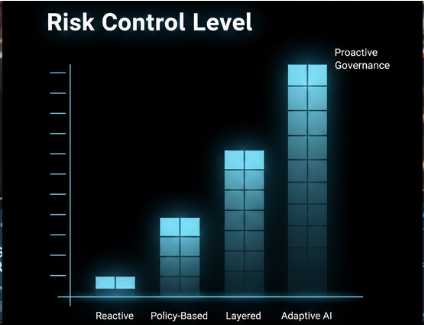
Organizations operating at the “Reactive” stage respond after incidents. Those at the “Adaptive AI” stage embed continuous monitoring, simulation testing, and red-team exercises.
Safety Techniques Used by Leading AI Labs
| Technique | Purpose |
| Red Team Testing | Simulate adversarial misuse scenarios |
| Constitutional AI | Embed rule-based behavioral constraints |
| Output Moderation Models | Block harmful instructions |
| Capability Evaluation Benchmarks | Test model boundaries before release |
| Access Throttling | Prevent mass automated abuse |
These mechanisms aim to reduce risk without crippling performance.
The Business Implication: Trust as a Competitive Advantage
For enterprises integrating AI, the bigger issue is not technical misuse—it is reputational and regulatory risk.
Organizations deploying advanced AI systems must answer:
- How is misuse detected?
- Are outputs audited?
- Who is accountable?
- What safeguards exist for edge cases?
Regulatory bodies globally are drafting AI governance laws. Companies that proactively build safety layers will move faster than those forced into compliance later.
Capability vs Control: A Strategic Balance
The debate is not about halting AI advancement. It is about building responsible scalability.
A simplified balance model:
High Capability + Low Control = High Risk
High Capability + High Control = Innovation with Stability
Low Capability + High Control = Safe but Limited
The target zone is the second quadrant.
The Practical Solution: Governance Blueprint for Organizations
Enterprises adopting advanced AI systems should implement:
- Risk Classification Matrix
Categorize use cases into low, medium, high sensitivity. - Tiered Access Controls
Limit advanced reasoning access to authorized users. - Logging & Traceability
Maintain audit logs of high-complexity queries. - Continuous Red-Team Testing
Simulate adversarial scenarios regularly. - Human-in-the-Loop Escalation
Flag ambiguous outputs for manual review.
This structured approach ensures innovation without uncontrolled exposure.
Final Perspective
Anthropic’s caution highlights an inflection point in AI evolution. As models grow more capable, governance must scale proportionally. The future will not be defined by which AI is most powerful—but by which AI is most responsibly engineered.
The solution to the fear of misuse is not retreat. It is architecture.
The companies that invest in safety frameworks today will build the most durable AI ecosystems tomorrow.