



















Table of Contents
Introduction: The Next Big Leap in Technology
Every few decades, technology takes a giant leap that changes industries, economies, and the way nations compete. Computers transformed business. The internet changed communication. Smartphones reshaped daily life. Now, many experts believe the next breakthrough could come from quantum computing.
https://www.kinesiacamassafisio.com/curarsi-con-gli-elettromedicali-in-fisioterapia/ While traditional computers process information using bits that are either 0 or 1, quantum computers use a very different method that allows them to solve certain problems much faster. This is why governments, researchers, and global companies are investing heavily in the field.
Ambien 10 Mg Price India has also entered this race with serious intent. Through national programs, academic research, and growing private-sector interest, the country is working to build long-term capabilities in quantum technologies.
Buy Valium Online Without Prescription Quantum computing may still be developing, but its potential impact is already attracting worldwide attention.
What Is Quantum Computing in Simple Terms?
Ambien Without Prescription A normal computer works step by step. It processes instructions using bits, where each bit is either on or off.
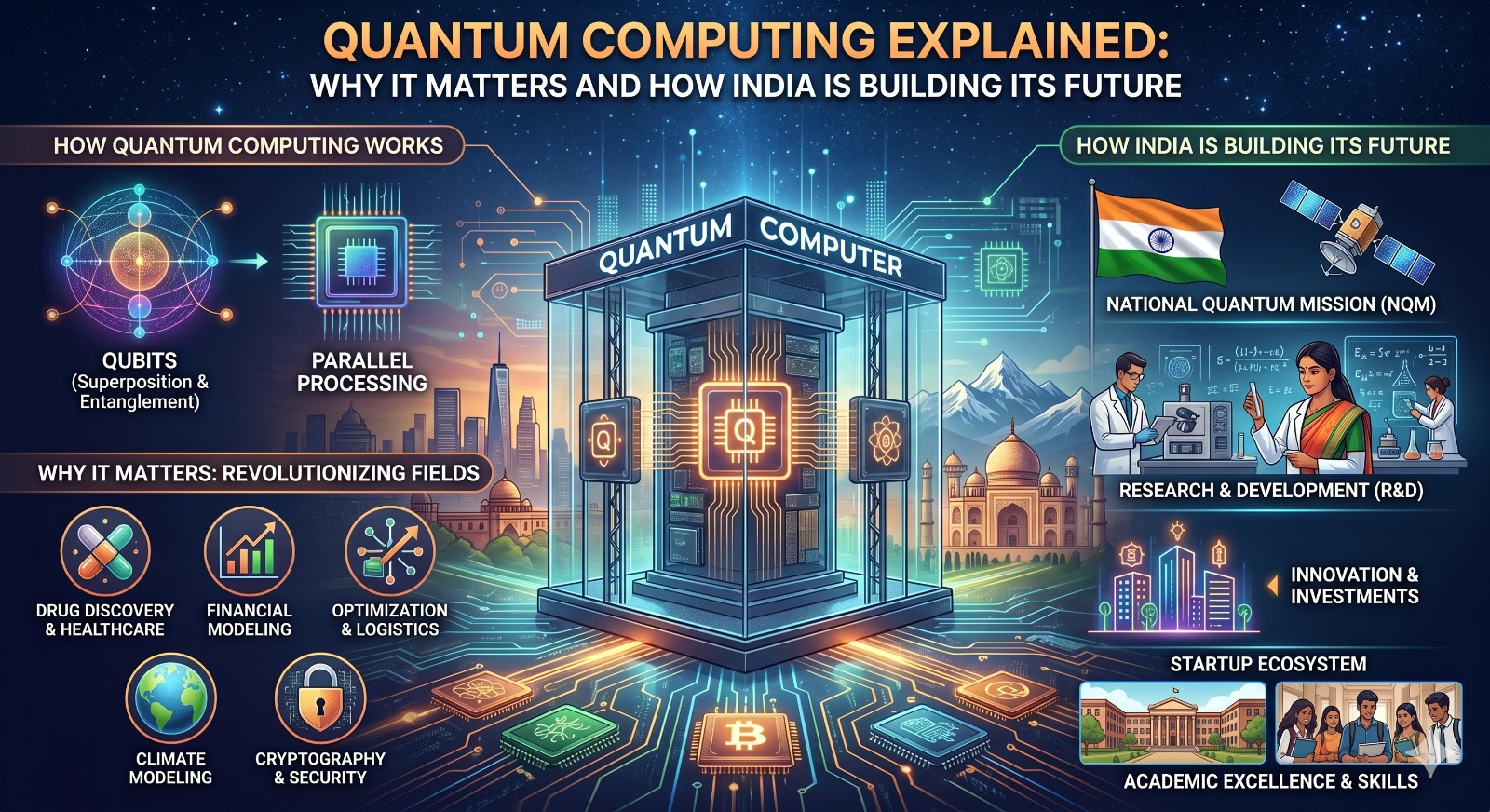
https://clinicakemana.com/marcaje-reductor-de-abdomen/ Quantum computing uses quantum bits, also called qubits. These qubits can exist in multiple states at the same time. This allows quantum machines to explore many possibilities simultaneously instead of one after another.
https://www.hollandchiropracticcenter.com/success-stories/ Think of it like this:
- A traditional computer checks one route at a time.
- A quantum computer can evaluate many routes together.
https://focusphotographers.org/membership/ This does not mean quantum computers will replace laptops or phones. Instead, they are expected to solve highly complex problems that would take classical systems years or even centuries.
Why Quantum Computing Matters
https://celiacmama.com/watermelon-pizza/ The real value of quantum computing lies in its ability to tackle problems that are too large or too complex for ordinary systems.
1. Drug Discovery and Healthcare
Zolpidem 5Mg Order Online Developing new medicines requires understanding molecular interactions at a deep level. Quantum systems could simulate molecules more accurately and speed up research.
Tramadol Online Purchase This could help reduce development time for treatments and vaccines.
2. Financial Modeling
Order Valium Online Banks and investment firms constantly evaluate risk, market movements, and portfolio strategies. Quantum tools may help optimize these calculations faster.
3. Supply Chain Optimization
Global logistics networks involve thousands of variables such as routes, fuel, demand, and timing. Quantum computing could help businesses optimize operations in real time.
4. Cybersecurity
https://eddieadamsworkshop.org/2025-teams/ Quantum computing may eventually challenge current encryption methods. At the same time, it can also support stronger next-generation security systems.
5. Climate and Energy Research
Buy Tramadol 100 Mg Online Researchers can use advanced simulations to study batteries, materials, weather systems, and cleaner energy solutions.
Why It Is Still Early-Stage Technology
Order Soma Online Quantum computing is promising, but it is not yet mainstream.
- Qubits are delicate and unstable
- Systems require extremely controlled environments
- Error correction remains difficult
- Hardware is expensive
- Skilled talent is limited globally
Lorazepam Buy Online This means practical large-scale commercial use is still developing. However, progress is moving faster each year.
https://celiacmama.com/disclosure/ That is why countries are investing now—to avoid being left behind later.
How India Is Building Its Quantum Future
India has recognized that quantum technology is not just a scientific topic—it is a strategic national priority.
The government launched the National Quantum Mission, aimed at building research capability, developing quantum hardware, creating secure communication systems, and growing a skilled workforce.
India is focusing on several areas:
Research Institutions
Top institutes such as Indian Institute of Science, various IITs, and national laboratories are actively working on quantum science.
Startups and Innovation
Indian startups are beginning to explore quantum software, security solutions, and simulation tools. This could become an important growth area over the next decade.
Talent Development
Universities and technical institutions are gradually expanding quantum-related education, which is essential for long-term competitiveness.
Strategic Independence
Building domestic capability reduces dependence on foreign technologies in critical sectors such as defense, telecom, and cybersecurity.
Case Study: Why Early Investment Matters
Consider the semiconductor industry. Nations that invested early built strong ecosystems, manufacturing power, and strategic advantage. Those that delayed became dependent on imports and external supply chains.
Quantum computing may follow a similar path.
If India develops talent, research infrastructure, and commercial partnerships early, it can become a creator—not just a consumer—of future technologies.
That opportunity extends beyond prestige. It affects jobs, exports, national security, and economic growth.
Business Opportunities for Companies
Quantum computing may sound like something only scientists use, but businesses should pay attention now.
Short-Term Opportunities
- Research partnerships
- Quantum-ready cybersecurity planning
- Talent training programs
- Industry experimentation
Mid-Term Opportunities
- Logistics optimization
- Advanced manufacturing simulation
- Financial analytics
- Material science innovation
Long-Term Opportunities
- New business models
- Breakthrough pharmaceuticals
- Ultra-secure communications
- National-scale computing infrastructure
The companies learning today may lead tomorrow.
What Leaders Should Understand Right Now
Business owners do not need a quantum computer today. But they should understand the strategic direction of technology.
The right mindset is:
- Watch the ecosystem
- Build awareness
- Invest in learning
- Identify future use cases
- Strengthen digital foundations now
Just as cloud computing once seemed distant and later became essential, quantum computing could follow a similar path over time.
Common Myths About Quantum Computing
Myth 1: It Will Replace All Computers
No. Traditional systems will remain essential. Quantum machines are designed for specific complex tasks.
Myth 2: It Is Decades Away
Some large-scale use may take time, but active progress is happening now.
Myth 3: Only Big Countries Benefit
Smaller nations and emerging economies can benefit through software, talent, research, and specialized applications.
Final Thoughts: A Long Game Worth Watching
Quantum computing is not a passing trend. It represents a new computing model with the potential to reshape science, industry, defense, and economic power.
India entering this space is an important step. With the right investments in research, education, startups, and infrastructure, the country can build a strong position in the next technology wave.
For businesses and leaders, the message is simple:
You do not need to master quantum computing today.
But you should not ignore it.
Because the technologies that look early and complex today often become the foundations of tomorrow’s economy.