


















Table of Contents
The Race for Seamless Sharing
In today’s mobile-first world, speed and simplicity define user experience. Whether it’s sharing documents, photos, or business data, users expect interactions to be instant and effortless. For years, Apple set a benchmark with its seamless file-sharing experience through AirDrop, creating a standard that users across ecosystems began to expect. Now, Google appears to be closing that gap with a new “Tap to Share” feature for Android devices—an innovation aimed at making file sharing as intuitive as a simple physical gesture.
The Problem: Friction in Everyday Sharing
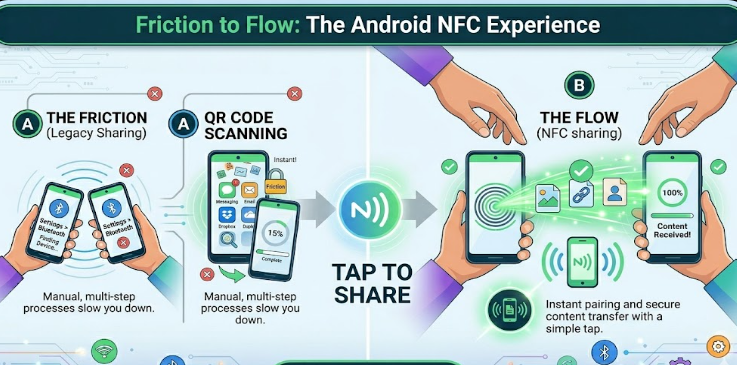
https://focusphotographers.org/sponsors-3/ Despite significant advancements in Android’s ecosystem, file sharing has often remained inconsistent. Users rely on multiple options—Bluetooth, QR codes, third-party apps, or cloud links—each with its own limitations. These methods introduce delays, compatibility issues, or unnecessary steps, especially when speed matters.
For businesses, this friction translates into inefficiency. Imagine a sales team trying to share presentations during a client meeting or operations teams exchanging documents on the floor. Even a few extra steps can interrupt workflow and reduce productivity. The lack of a unified, intuitive sharing method has long been a subtle yet persistent challenge in the Android ecosystem.
The Shift: What “Tap to Share” Brings
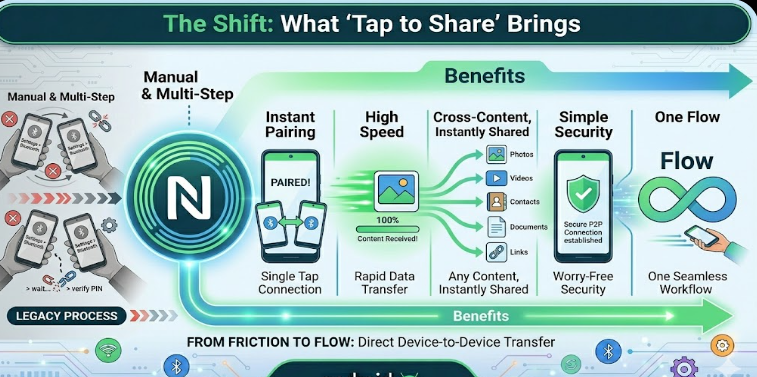
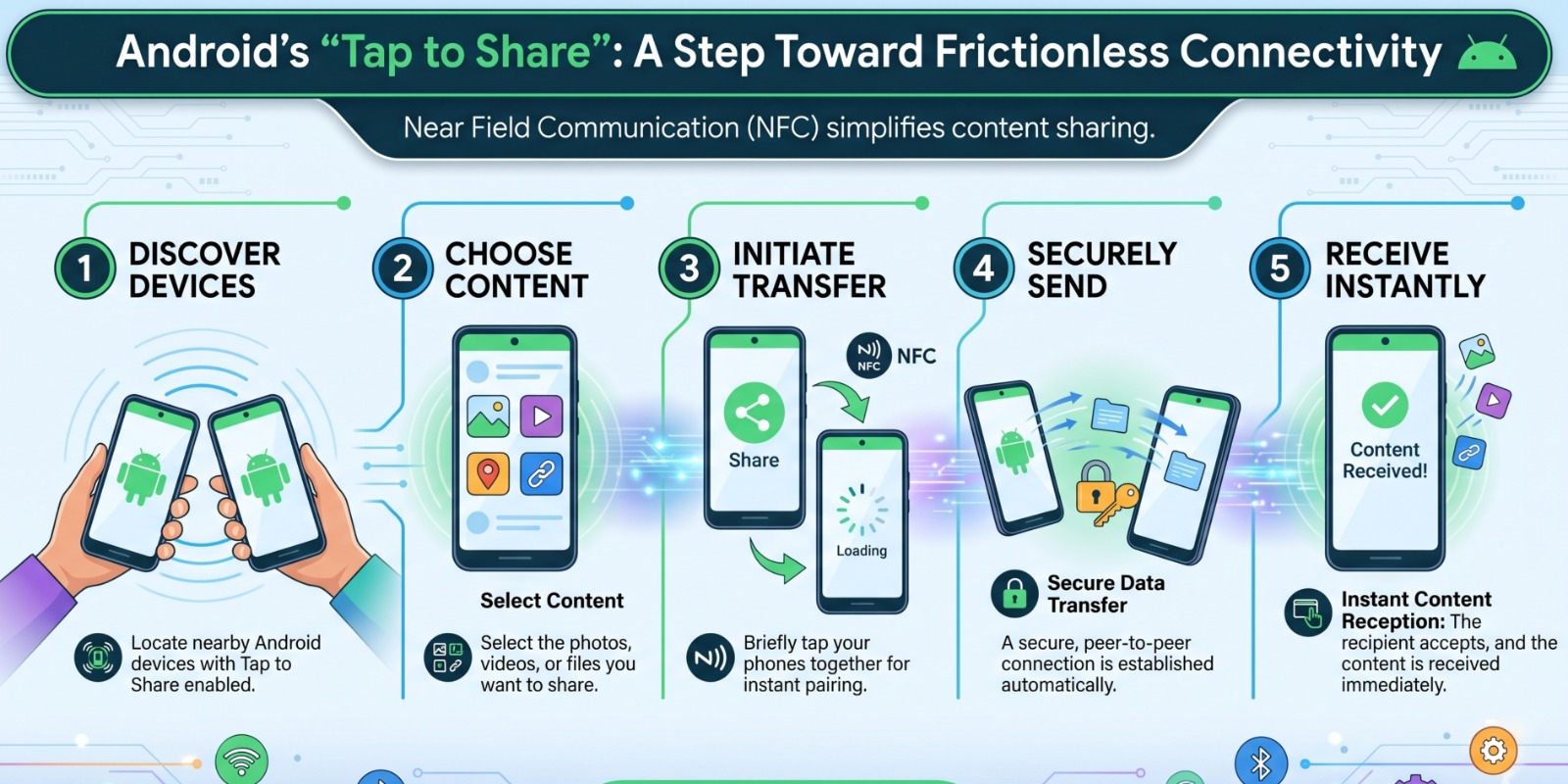
Buy Ultram Online Google’s “Tap to Share” feature aims to simplify this process by enabling Android devices to share files instantly through proximity—likely leveraging technologies such as NFC (Near Field Communication) combined with wireless transfer protocols. The concept is straightforward: bring two devices close together, tap, and the transfer begins.
Tramadol For Sale Online This approach removes the need for manual pairing, scanning, or navigating through multiple menus. It aligns with a broader industry trend where user interfaces are becoming more gesture-driven and context-aware. By reducing the number of steps required, Google is not just improving convenience—it is redefining how users interact with their devices.
Comparing Ecosystems: Android vs iPhone Experience
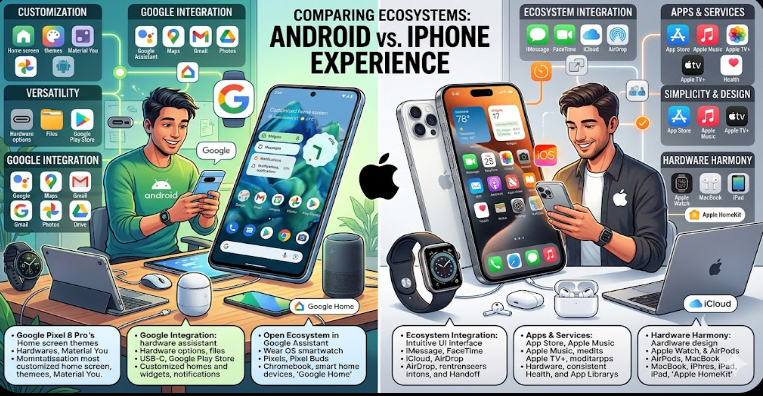
Ambien Online Ordering The introduction of “Tap to Share” clearly positions Android to compete more directly with Apple’s ecosystem. While AirDrop has been a strong differentiator for iPhones, Android’s open ecosystem has historically prioritized flexibility over uniformity.
https://commongroundpr.com/industries/ However, flexibility without consistency often leads to fragmented user experiences. With this new feature, Google is attempting to bring a level of standardization that Android users have long needed. If executed well, this could significantly narrow the experience gap between Android and iPhone users, particularly in everyday interactions like file sharing.
Business Perspective: Why This Matters

While this feature may seem like a consumer-focused update, its implications for businesses are substantial. In modern organizations, especially those operating in hybrid or field environments, quick data exchange is critical.
Buy Xanax Online Without Prescription Consider industries like retail, logistics, or consulting:
- A retail manager sharing inventory reports instantly with staff
- A logistics supervisor transferring route data on-site
- A consultant presenting files directly from their phone during meetings
https://www.kinesiacamassafisio.com/contatti/ In each case, reducing friction in file sharing leads to smoother operations and better communication. Over time, these small efficiencies compound into meaningful productivity gains.
Case Study: Improving Workflow Efficiency in Field Operations
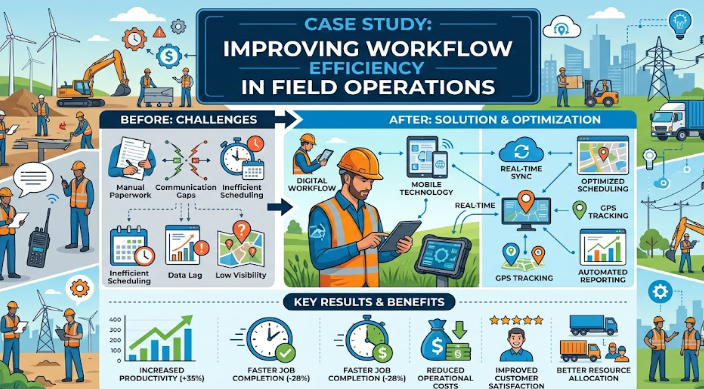
Ambien Buy Online Let’s consider a mid-sized distribution company operating across multiple warehouses. Previously, supervisors relied on messaging apps or email to share documents such as delivery schedules or stock updates. This process often involved delays, file format issues, and occasional data mismatches.
After adopting a proximity-based sharing system similar to “Tap to Share,” the company observed noticeable improvements:
- File transfer time reduced from minutes to seconds
- Errors caused by outdated documents decreased significantly
- Team coordination improved during peak operational hours
Although this is a simplified scenario, it highlights the broader impact of reducing friction in communication tools. Features like “Tap to Share” are not just about convenience—they directly influence operational efficiency.
The Bigger Picture: Toward Context-Aware Computing

“Tap to Share” is part of a larger movement toward context-aware computing, where devices understand user intent and respond accordingly. Instead of navigating through apps and menus, users interact with technology in more natural ways—through gestures, proximity, and voice.
This evolution aligns with how modern software platforms are being designed. For instance, enterprise systems like Odoo are also moving toward integrated, real-time workflows where data flows seamlessly across modules without manual intervention. The common goal across both consumer and enterprise technologies is clear: reduce friction and enhance usability.
Challenges and Considerations
While the concept is promising, execution will determine its success. Android’s ecosystem is vast, with multiple manufacturers, device types, and OS versions. Ensuring consistent performance across this diversity will be a key challenge for Google.
Buy Ambien Online Overnight Security is another important factor. Instant file sharing must be accompanied by robust safeguards to prevent unauthorized access or accidental transfers. Users need confidence that convenience does not come at the cost of privacy.
Order Pregabalin Online Additionally, adoption will depend on how seamlessly the feature integrates into existing workflows. If it requires additional setup or lacks compatibility with older devices, its impact may be limited.
What Business Owners Should Watch
Zolpidem Online Order For business owners and decision-makers, the introduction of features like “Tap to Share” signals a broader trend in technology: simplicity is becoming a competitive advantage. Tools that reduce steps, save time, and improve user experience are no longer optional—they are expected.
Buy Soma Overnight Organizations should evaluate how such advancements can be leveraged within their operations. Whether it’s through mobile tools, ERP systems, or communication platforms, the focus should be on eliminating friction and enabling real-time collaboration.
Conclusion: Small Feature, Big Impact
At first glance, “Tap to Share” may appear to be a minor update in the Android ecosystem. However, its implications go far beyond convenience. By simplifying one of the most common digital interactions, Google is addressing a long-standing gap and moving closer to a truly seamless user experience.
In a world where efficiency and speed define success, even small improvements can have a significant impact. For users, it means less time navigating technology. For businesses, it translates into smoother workflows and better productivity. And for the industry as a whole, it marks another step toward a future where technology works intuitively—almost invisibly—within our daily lives.