















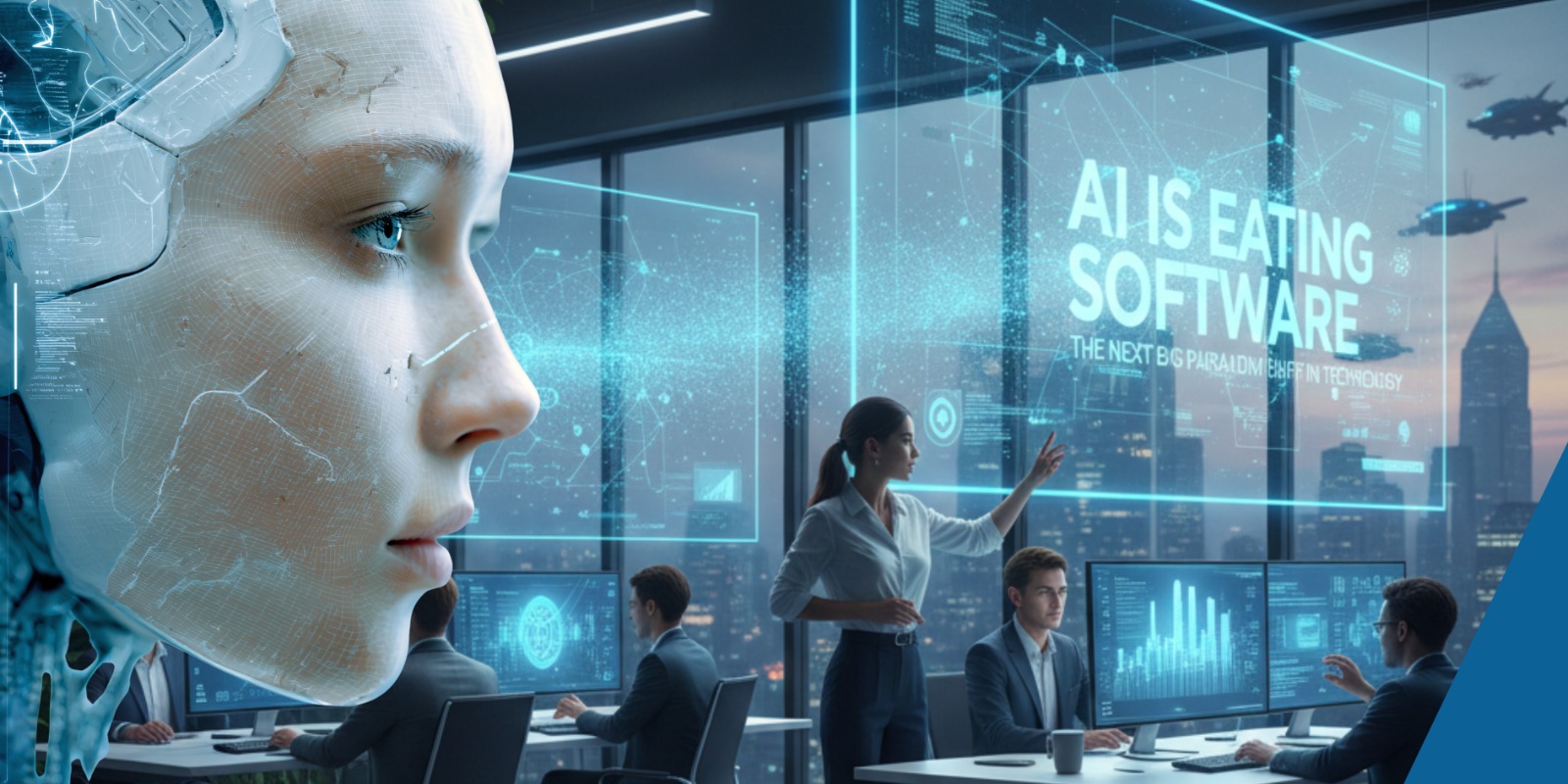
This powerful statement encapsulates where we stand today in technology’s evolution. Software dominated the late 20th and early 21st centuries, transforming industries from finance to manufacturing. Now, artificial intelligence (AI) is emerging as the next tectonic force — poised not just to augment software, but to replace, enhance, and redefine it entirely.
In this long-form analysis, we explore what this means for enterprises, developers, consumers, and the global economy. We will examine historical context, present evidence, future forecasts, and practical case studies — supported by Purchase Tramadol Without Prescription diagrams, tables, and charts for clarity.
Table of Contents
Order Tramadol Online 1. From Software to AI
The phrase “software is eating the world” was coined in the early 2010s, reflecting how software disrupted traditional industries (retail, banking, transportation). Today, AI is emerging as an even broader force — not limited to automation, but capable of https://reachrehab.co.uk/birmingham/ creative reasoning, prediction, and autonomous decision-making.
Software took decades to become ubiquitous; AI is advancing in years.
Key Idea: Software standardized processes; AI augments intelligence.
Zolpidem Online Order 2. Historical Context: Software’s Dominance
To appreciate where we’re going, it helps to look at where we’ve been.
Order Soma Online Technology Adoption Waves
           Level of Impact
^
|                                    AI
|                        Software
|             Hardware
|    Analog
+--------------------------------------------> Time
    1970       1990       2010       2025
Purchase Diazepam Software’s Impact Timeline
| Era | Buy Soma Overnight Innovation | Order Soma 350Mg Online How It Changed the World |
| 1970s | Mainframe OS | Centralized computing |
| 1980s | PC software | Computing at scale |
| 1990s | Internet | Global connectivity |
| 2000s | Mobile apps | Always-on access |
| 2010s | Cloud | On-demand computing |
| 2020s | AI | Augmented intelligence |
Software democratized capabilities — bringing tools once reserved for experts into the hands of millions.
3. Why AI Is Eating Software
While software executes logic based on rules, Order Diazepam Online AI learns patterns from data — enabling intelligence that adapts.
Buy Tramadol 100 Mg Online AI vs Software: Under the Hood
Traditional Software      AI-Driven Systems
------------------        ------------------
Fixed rules               Adaptive models
Deterministic output      Probabilistic output
Requires explicit coding  Learns from examples
Task-specific             Multi-task learning
http://www.belico.co.uk/commercial/ What Makes AI Disruptive
- Learning Ability: AI models evolve as data grows.
- Generalization: Same model can handle image, text, speech.
- https://itxasofisio.com/fisioterapia-lactancia-materna/ Prediction & Creativity: AI can forecast trends and generate new content.
- https://www.musicremembrance.com/orlando-funeral-music/ Autonomy: Systems can make decisions with minimal human input.
https://www.sonorabariatrics.com/4432-2/ 4. Comparison: Software vs AI
| Clonazepam Purchase Online Feature | Traditional Software | Buy Tramadol 100 Mg Online AI-First Systems |
| Development Approach | Manual coding | Model training |
| Knowledge Source | Human rules | Data patterns |
| Adaptability | Static | Dynamic learning |
| Error Handling | Predictable | Improves over time |
| Use Cases | Clear rules | Complex prediction & perception |
| Maintenance | Frequent code updates | Retraining models |
5. Real-Time Case Studies
Case Study 1: Automated Customer Support
Before (Software):
Rule-based chatbots with predefined responses.
After (AI):
GPT-based conversational agents that understand context and user intent.
Impact Metrics
| Metric | Rule-based Bot | AI Bot |
| Resolution Rate | 32% | 78% |
| User Satisfaction | Low | High |
| Escalation Rate | High | Low |
AI chat systems reduce manual support load while improving experience.
Case Study 2: Smart Medical Diagnostics
Software Approach:
Manual entry rules and lookups for symptoms.
AI Approach:
Deep learning scans medical images, detects anomalies with high precision.
Visual: Diagnostic Accuracy Curve
Accuracy (%)
^
|        AI Models
|           98%
|      /
|     /
|    /   Software Tools
|   /      85%  _______
|  /______________
+--------------------------------> Time / Experience
AI doesn’t replace doctors, but accelerates and improves diagnosis quality.
6. Strategic Roadmap for Enterprises
Adopt an AI-First Mindset
- Build data infrastructure
- Train models on domain data
- Shift from deterministic code to hybrid systems
AI Integration Stages
| Stage | Focus | Example |
| 1. Automation | Replace manual tasks | RPA with AI OCR |
| 2. Augmentation | Support human decision-making | AI dashboards |
| 3. Autonomy | AI makes decisions | Self-optimizing systems |
7. Economic and Workforce Impact
As AI eats software, new roles emerge while others evolve.
Workforce Trend Table
| Role | 2020 | 2026 Forecast |
| Software Engineer | High | High (AI-augmented) |
| Data Scientist | Growing | Very High |
| AI Ethics Specialist | Emerging | High |
| Manual QA Tester | High | Declining |
| Robotic Process Analyst | Growing | High |
AI expands job categories — but reskilling is essential.
8. Risks & Ethical Considerations
While AI brings opportunity, it also raises challenges:
- Bias & fairness: Models may perpetuate societal biases.
- Control & safety: Autonomous systems require safeguards.
- Job displacement: Some roles will transform rapidly.
- Ethics & governance: Rules must evolve as capabilities grow.
Framework for Responsible Deployment
- Transparent data practices
- Inclusive design teams
- Continuous monitoring
- Regulation & standards compliance
9. Preparing for an AI-First World
Software transformed every industry — from healthcare to finance, transportation to entertainment. Now, AI is poised to reshape software itself, shifting development from manual rules to data-driven intelligence.
The path forward requires:
- Strategic investment in AI infrastructure
- Deep integration of AI throughout product lifecycles
- Ethical and responsible governance structures
- Upskilling and reskilling workforces
Jensen Huang’s message is not alarmist — it’s directional. AI isn’t just another tool; it’s the next core platform on which all software will be built and reimagined.
Understanding this shift today prepares you for leadership tomorrow.
Embedded Visuals (Original)
AI vs Software Logic
Software Logic Flow
-------------------
Input -> Code Rules -> Output
(Static behavior)

AI Logic Flow
-------------------
Input -> Trained Model -> Output
(Model evolves with data)
Simple Comparison Chart
+----------------------+-----------------+

|      Capability      | Software | AI   |

+----------------------+----------+------+

| Pattern Recognition  |   ❌     |  ✅  |

| Decision Learning    |   ❌     |  ✅  |

| Predictive Analysis  |   🟡     |  ✅  |

| Autonomous Control   |   ❌     |  🟡  |

+----------------------+----------+------+
As AI continues to eat software, businesses and individuals must adapt. Whether you’re a leader, developer, student, or enthusiast — this shift is your invitation to engage, learn, and lead in a world where smart machines and smart people work together.